

The SAP Business Data Cloud Certificate (C_BCBDC)—also referred to as the BDC certification—has become one of SAP’s most important credentials as companies move into unified, AI-ready data architectures. According to SAP’s official November 2025 certification update, the SAP Business Data Cloud exam is part of SAP’s new generation of practical, performance-based, and AI-aware exams. These changes apply across SAP’s cloud portfolio and mark a shift toward real-world, scenario-driven evaluation.
In this guide, you’ll learn how the updated C_BCBDC exam works, what SAP expects from candidates, and how to prepare effectively—without revealing any exam questions. Everything here is based on SAP’s officially published certification updates.
What Is the SAP Business Data Cloud Certification?
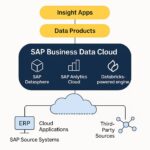
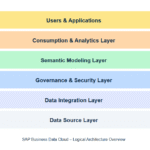
The SAP Business Data Cloud certification validates your understanding of SAP’s unified data architecture, including:
- Unified data architecture
- One Domain Model
- Foundation Services
- Data Products
- Datasphere modeling
- Semantic enrichment
- SAP Analytics Cloud intelligent applications
- SAP BW modernization
- Delta Sharing and Databricks integration
It is not a technical hands-on exam. It measures conceptual clarity and your ability to explain architecture in spoken form.
Updated Exam Format for 2025

The SAP Business Data Cloud certification is delivered through Yoodli, an AI-powered speaking assessment tool.
Exam structure
- Around 30 open-ended questions
- You answer by speaking (not typing)
- Each answer: 35–45 seconds
- You have ~2 hours total
- You can pause between questions
- AI grades your clarity, structure, confidence, and correctness
What Yoodli evaluates
- Clear structure
- Calm, confident tone
- Staying on topic
- Using correct SAP terms naturally
- Smooth explanation
This is a communication-focused, scenario-based certification.
Topics Covered in SAP BDC Exam
SAP shared training slides that include these topic areas.
1. SAP Business Data Cloud – Core Certification Topics

This section gives you an overview of the main areas SAP expects you to understand for the exam. It introduces the foundational concepts of Business Data Cloud, including architecture, modeling, and security. These topics form the backbone of your overall knowledge.
To pass, you should understand:
- Architecture & purpose
- Business challenges solved
- One Domain Model
- Semantic modeling
- Data Products lifecycle
- Foundation Services
- Delta Sharing
- Data Lake & governance
- Data security model
- Example use cases
For deeper learning, check the Exploring SAP Business Data Cloud official training.
2. SAP Business Data Cloud – BW Modernization (Lift → Shift → Innovate)
Here you’ll learn how organizations transition from traditional SAP BW systems into the modern Business Data Cloud environment. The Lift → Shift → Innovate framework helps you understand both the migration steps and the long-term value of modernization. This topic is essential for explaining how legacy systems evolve into cloud-ready architectures.
Key knowledge:
- Why BW belongs inside SAP Business Data Cloud
- Lift: Initial onboarding
- Shift: Harmonizing & generating data products
- Innovate: Using AI/ML & advanced analytics
- Data Product Generator
- Supported BW versions
- Subscriptions
For deeper learning, check the official Modernizing SAP BW with SAP Business Data Cloud learning path.
3. SAP Business Data Cloud – Key Datasphere Topics
This part covers the role of SAP Datasphere within Business Data Cloud as the modeling and semantic layer. It introduces key features like generated spaces, harmonization, and semantic enrichment. These concepts help you understand how data becomes structured and usable for analytics.
You must know:
- Role of Datasphere inside SAP Business Data Cloud
- BDC-generated spaces
- Harmonization through modeling layers
- Semantic enrichment
- Extending SAP content
- Installing a data product into a space
Datasphere is the semantic and modeling layer of Business Data Cloud.
4. SAP Business Data Cloud –SAP Analytics Cloud (SAC) Topics
This section introduces SAC’s role in delivering intelligent analytics on top of Business Data Cloud. You’ll see how intelligent applications are installed, extended, and used for decision-making. It sets the stage for understanding the analytical layer of SAP’s unified ecosystem.
SAP expects knowledge of:
- SAC’s role inside Business Data Cloud
- Intelligent applications
- Use cases
- How to discover, install, and extend intelligent applications
5. SAP Business Data Cloud – Databricks & Delta Sharing Topics
Here you’ll learn how Business Data Cloud integrates with Databricks for AI, machine learning, and advanced analytics. The introduction highlights Delta Sharing, Unity Catalog, and other key concepts. This section shows how SAP collaborates with modern data platforms in real-world use cases.
Topics include:
- Delta Sharing (open protocol)
- Unity Catalog
- Databricks SQL
- Exploratory Data Analysis (EDA)
- MLflow
- Notebooks
- Sharing SAP Business Data Cloud data to Databricks
- Sending ML results back to SAP Business Data Cloud
For deeper learning, check the official Introducing SAP Databricks learning path.
What Kind of Questions to Expect (Ethical Overview)
Example question types (not real questions):
- “Explain how SAP Business Data Cloud solves fragmented SAP data.”
- “Describe the role of Datasphere in harmonizing application data.”
- “How does the Lift → Shift → Innovate approach modernize BW?”
- “Explain Delta Sharing and why it matters for Databricks integration.”
- “What is semantic enrichment and how does it help modeling?”
- “Describe how to install an intelligent application.”
SAP expects structured, scenario-based explanations.
SAP Business Data Cloud – Yoodli Answer Strategy
This part explains how Yoodli evaluates your spoken responses and why structure matters. It introduces the 4-step format that helps you deliver clear, confident answers. This section is crucial for maximizing your score during the exam.
SAP recommends this structure:
1. Intro
Define the concept in 1-2 sentences.
2. Key Points
Use 2-3 clear technical points with SAP terminology:
- One Domain Model
- Foundation Services
- Harmonization
- Delta Sharing
- Data Products
- Semantic Enrichment
3. Example
Relate the concept to a real business scenario in one sentence.
4. Conclusion
Connect the concept to the SAP Business Data Cloud architecture.
SAP’s Official Exam Tips
This section highlights the practical guidance SAP provides to help you succeed in the SAP Business Data Cloud Certificate (C_BCBDC) certification. It explains how to use the Yoodli platform effectively, manage your time, structure your responses, and avoid common mistakes. These official tips are essential for boosting your confidence and maximizing your score during the exam.
SAP trainers recommend:
- Use the pause button before answering
- Chunk long explanations
- Aim for 35–45 seconds per answer
- No penalty for speaking too much detail
- Don’t contradict yourself
- Review feedback between attempts
- Press Save before the timer expires
Study Plan for Passing the SAP Business Data Cloud Certification
Here you’ll get a simple preparation roadmap focused on mastering concepts and practicing spoken explanations. It helps you approach the certification in a strategic way, without overwhelm. This introduction ensures you know exactly how to organize your study efforts.
Step 1 — Study SAP Official Courses
- SAP Business Data Cloud Overview
- Introducing SAP Databricks
- BW Modernization
- Intelligent Applications (SAC)
Step 2 — Master Architecture Concepts
Focus especially on:
- ODM
- Semantic enrichment
- Data Products lifecycle
- Delta Sharing
- BDC-generated Datasphere spaces
- BW Lift → Shift → Innovate
Step 3 — Practice Speaking
Use a 40-second timer and practice delivering answers clearly.
Step 4 — Create Short Notes
Have bullet points for each topic (not scripts).
Final Thoughts
The SAP Business Data Cloud Certificate (C_BCBDC) is one of SAP’s most practical and future-focused credentials. It tests how well you understand SAP’s new unified data strategy rather than memorizing technical details. With the right structure, clear communication, and familiarity with the core topics, passing becomes very achievable. If you practice spoken answers and focus on real-world scenarios, Yoodli will score you highly. Overall, this certification positions you strongly in the evolving world of cloud analytics, data products, and AI-driven data architectures.